
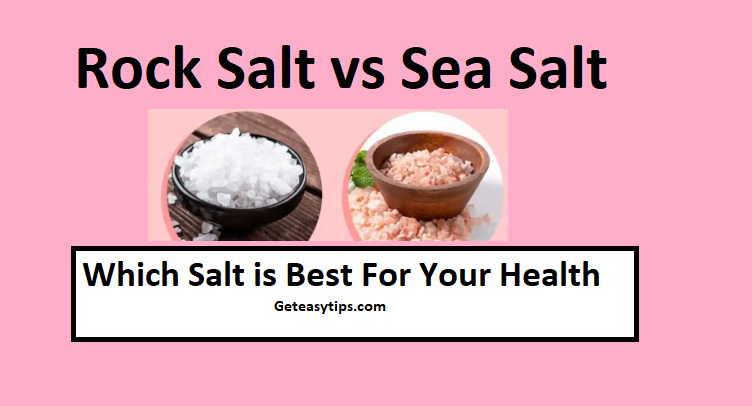
Rock Salt vs Sea Salt: Is Rock Salt better than Sea Salt
Salt is an essential mineral that has been used by humans for thousands of years, not only to enhance the flavor of food but also for preservation, medicinal purposes, and even in religious rituals. In this article, we will delve into the various types of salt, focusing on the differences between rock salt and sea salt, their uses in cooking, and their cultural significance.
What Do You Mean by Salt?
Salt, chemically known as sodium chloride (NaCl), is a crystalline mineral that occurs naturally in seawater and underground deposits. It is one of the oldest and most ubiquitous food seasonings and has been used since the beginning of recorded history. Salt is vital for human life, playing a crucial role in maintaining fluid balance, nerve function, and muscle contraction.
Also Read: Tips to Avoid Sleeping While Studying
Use of Salt in Our Daily Life
Salt is not just a seasoning; it is integral to various aspects of daily life:
- Culinary Uses: Enhances the flavor of food, acts as a preservative, and is essential in baking and cooking.
- Health and Medicine: Used in saline solutions, oral rehydration salts, and as a gargle for sore throats.
- Industrial Applications: Employed in water softening, de-icing roads, and in the manufacturing of chemicals.
- Cultural Significance: Symbolizes purity, preservation, and is used in rituals and ceremonies.
Types of Salt
There are several types of salt available, each differing in source, processing method, and mineral content:
- Table Salt: Mined from underground salt deposits and heavily processed to remove impurities and minerals.
- Sea Salt: Harvested by evaporating seawater, retaining trace minerals.
- Rock Salt (Halite): Mined from ancient underground salt deposits.
- Himalayan Pink Salt: A type of rock salt known for its pink color due to trace minerals.
- Kosher Salt: Coarse-grained salt used in koshering meat and as a cooking ingredient.
- Celtic Sea Salt: Harvested from coastal regions in France using traditional methods.
Difference Between Rock Salt and Sea Salt
Where Can I Find Rock Salt?
Rock salt is typically found underground in large deposits formed from ancient bodies of water that have long since evaporated. These deposits are mined through drilling and blasting. In India, rock salt is commonly found in regions like Rajasthan and Punjab.
Where Can I Find Sea Salt?
Sea salt is obtained through the evaporation of seawater, usually in coastal areas with warm, dry climates. In India, sea salt is produced in coastal states such as Gujarat, Maharashtra, and Tamil Nadu.
Making Process of Rock Salt and Sea Salt
- Rock Salt: Mined from underground deposits and then crushed and refined to remove impurities.
- Sea Salt: Produced by evaporating seawater in shallow ponds, often using solar energy, which leaves behind salt crystals along with trace minerals.
Sea Salt vs Rock Salt Taste
The taste of salt can vary based on its mineral content and texture:
- Rock Salt: Has a more intense and pure salty flavor, making it ideal for seasoning meats and grilling.
- Sea Salt: Offers a milder, sometimes briny flavor, and is often used as a finishing salt to enhance the taste and texture of dishes.
Is Table Salt and Sea Salt the Same?
No, table salt and sea salt are not the same:
- Table Salt: Mined from underground deposits, heavily processed, and often contains additives like iodine and anti-caking agents.
- Sea Salt: Harvested from seawater through evaporation, retaining trace minerals and typically less processed than table salt.
While both contain similar amounts of sodium by weight, sea salt may offer a different taste and texture due to the presence of additional minerals.
Rock Salt vs Sea Salt vs Pink Salt
- Rock Salt: Mined from underground deposits, often used for de-icing and in large salt blocks for grilling.
- Sea Salt: Harvested from seawater, used in cooking and as a finishing salt.
- Pink Salt: A type of rock salt, particularly Himalayan pink salt, known for its pink hue due to iron oxide and other trace minerals.
Each type of salt has unique properties that make them suitable for different culinary applications.
Difference Between Rock Salt and Sea Salt for Cooking
- Rock Salt: Due to its large crystals, it is often used in salt crusts for meats or in salt blocks for grilling.
- Sea Salt: Its finer crystals make it ideal for seasoning dishes during cooking or as a finishing touch.
What Do We Call Salt in Local Languages?
Salt holds cultural significance across India, and its name varies in different languages:
- Hindi: नमक (Namak)
- Odia: ନମକ (Namaka)
- Tamil: உப்பு (Uppu)
- Gujarati: મીઠું (Mithu)
- Punjabi: ਨਮਕ (Namak)
- Kannada: ಉಪ್ಪು (Uppu)
Conclusion
Understanding the differences between rock salt and sea salt can enhance your culinary experiences. While both serve the primary purpose of seasoning, their unique properties, flavors, and textures make them suitable for different cooking methods and dishes. Whether you’re grilling with rock salt or finishing a dish with sea salt, each type brings its own distinct touch to your meals.
FAQs
- Can I substitute rock salt for sea salt in recipes?
Yes, but be mindful of the texture and size of the crystals. Rock salt has larger crystals and may not dissolve as quickly as sea salt.
- Is sea salt healthier than table salt?
Sea salt contains trace minerals that table salt lacks, but both have similar sodium content. Moderation is key.
- Can I use sea salt for baking?
Sea salt can be used in baking, but its larger crystals may not dissolve as evenly as table salt, potentially affecting the texture.
- Is Himalayan pink salt better than sea salt?
Himalayan pink salt contains additional minerals and has a distinct flavor, but both salts can be used interchangeably depending on personal preference.
- Where can I buy rock salt and sea salt in India?
Both types of salt are available in supermarkets, specialty stores, and online marketplaces across India.
Image credit: Pexels